Motorists across the globe are prohibited from driving beyond the speed limit or the limit of speed allowed by law enforcers for vehicles plying the road. Speed limits are set in km/h (kilometers per hour) except in the United Kingdom and the United States which are indicated in mph (miles per hour). Britain introduced the first numeric speed limit for automobiles in the 1860s, which was set at 10 mph or 16 km/h at that time. The UK’s speed limit was eventually reduced to 2 mph in towns and 4 mph in rural areas. Over the years, speed limits have been increased yet most countries and, in some instances, different regions or territories within countries, have different speed limits within their respective jurisdictions.
Texas State Highway 130, for example, is imposing a speed limit of 85 mph (137 km/h), making it the highest limit in the entire state. Four countries including Germany (popular for autobahns) have no speed limits on motorways yet other nations such as Iraq, Bulgaria, and the United Arab Emirates have a motorway limit of 87 mph (140 km/h). In Bhutan, the fastest a vehicle can go is 31 mph (50 kph) while Bangladesh, Bolivia, and Fiji put the cap at 50 mph (80 kph). However, in the Cayman Islands, the maximum limit is 19 mph (30 kph) in built-up areas and 25 mph (40 kph) on rural roads.
Just a side note: only Queen Elizabeth II is the only person in the UK allowed to drive across the country sans a driver’s license. Despite receiving training as a driver and mechanic for the Women’s Auxiliary Territorial Service during World War II, the Queen is not mandated to take and pass a driving test but she is permitted to drive without a number plate on her state vehicle.
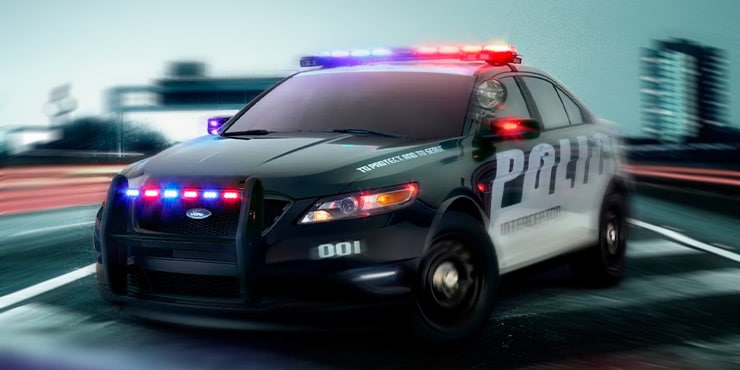
Going back, there have been recent discussions about whether or not policemen are spared from road traffic laws, particularly the speed limit provision. The police only need to park on a double yellow, exceed the speed limit, cut other drivers, and use their cellular phones, provided they are attending to an emergency. According to The Traffic Signs Regulations and General Directions 2002 and the Road Traffic Regulations Act 1984, emergency vehicles in the UK are exempt from red traffic signals, adhering to traffic lights including pedestrian-controlled crossings and left/right signs, and observing speed limits as long as it is for policing purposes, whose legal definition remains vague as of writing. Policing purpose is settled as a matter of fact as several Home Office rules and force policies have placed the boundaries on what the policing purpose is. Yet, the so-called policing purpose includes safe driving, maintaining a duty of care to the public, and upholding standards of law enforcement. Policemen, like motorists, are supposed to comply with road traffic laws at all times except in justifiable circumstances.
Apparently, the majority of policemen, if not all, are abusing the exemption on the speed limit rule and getting away with it most of the time. Some of the police are even seen driving patrol cars and cruising past traffic cameras at higher speeds. Not to mention they get tickets for, let’s say, parking illegally. If the ‘policing purpose’ has been established for violating the law, they won’t be usually penalized for that as long as they prove that blue lights were shown and they own the appropriate license. Otherwise, the policeman in question has to present any evidence or two to confirm the rightful use of the vehicle which is for a policing purpose. To make things more interesting, three various types of licensed police drivers decide if an exemption to the speed limit can be invoked.
BASIC Driving Authority
Those who hold a BASIC driving authority are not given any exemption because their vehicle may not be used to respond to an emergency situation. Likewise, a car fitted with emergency equipment such as blue lights and sirens may not be operated while it is in motion. Generally, they are prohibited from breaching the maximum driving limit or overstepping road signs and can only drive police cars to make inquiries related to their work. They are trained to halt vehicles in routine circumstances and drive within the purview of the Highway Code.
STANDARD Driving Authority
A police with a STANDARD driving authority is allowed to surpass the maximum speed by more than 20 mph. Section 87 of the Road Traffic Regulation Act states a law enforcer can seek an exemption if responding to an incident that requires an immediate response. They must be eligible to the standards outlined in the Police Driving Curriculum which would enable them to cater to urgent cases using response performance vehicles. Also, they have the discretion to utilize emergency ancillary equipment under specific circumstances. A law enforcer, in certain cases, can go beyond the maximum limit between 20 mph to 29 mph due to applicable circumstances. Going beyond the 20 mph-top permitted speed will result in a policeman receiving management advice. But those who own a STANDARD driving authority are barred from driving past the 30 mph limit or the divisional chief inspector will deal with such misconduct accordingly.
ADVANCED Driving Authority
Unlike those holding the two aforementioned driving authorities in the UK, no upper limits have been determined. Police with an ADVANCED driving authority can claim the speed limit exemption in case he is responding to a crucial matter if they manage to fully justify the rationale behind driving beyond the maximum speed. Similar to holders of a STANDARD driving authority, they must be authorized to respond to emergencies in a safe manner as per the Police Driving Curriculum as well as use emergency ancillary equipment in some cases.
Rules on speed limits are implemented worldwide to enhance safety as well as protect not only pedestrians but also drivers. Setting the cap on the speed a driver can go, in turn, will decrease the amount of time necessary to be able to respond to changes in the road or traffic flows. Traveling at a higher speed increases the risk of losing control of the car while adapting to ever-changing road conditions. By default, police drivers are not hugely exempt from road traffic rules based on existing regulations unless they are handling or helping in a catastrophe, disaster, or any other emergency scenario one can think of. Even if law enforcers are not required by the law to observe driving limits, they are enjoined in giving the utmost regard to their driving behavior and following traffic laws.
This article was prepared by the Association Against Abuse of Police Powers and Privileges (AAAPPP), a UK not-for-profit organisation specializing in assisting victims of abuse of power and corruption in the UK Police.
Leave a Reply